# 在中国信息渠道由流量平台主导的今天,顶级的建筑事务所为什么仍然需要一个真正意义上的官网? - ID: 67 - URL: https://www.stoyard.com/viewpoint/67 - English URL: https://www.stoyard.com/en/viewpoint/67 - Category: 网站数字化 - English Category: Website digitization - English Title: Today, when China's information channels are dominated by traffic platforms, why do top architectural firms still need a real official website? ## 中文主体 > 2026 年,为什么一个优秀的中国建筑事务所,仍然值得投入大量资源建设一个深度官网? ### 在2026年AI崛起的当下,中国的顶级建筑事务所值得长期投入大量的资源来梳理项目,设计并运营一个深度内容的事务所官网吗?** 首先说结论:值得。甚至越过 2026 年,越值得。** 因为对一个优秀建筑事务所来说,官网的价值早已不只是“线上名片”。它是一个机构最稳定、最完整、也最不依赖平台算法的公共表达系统。 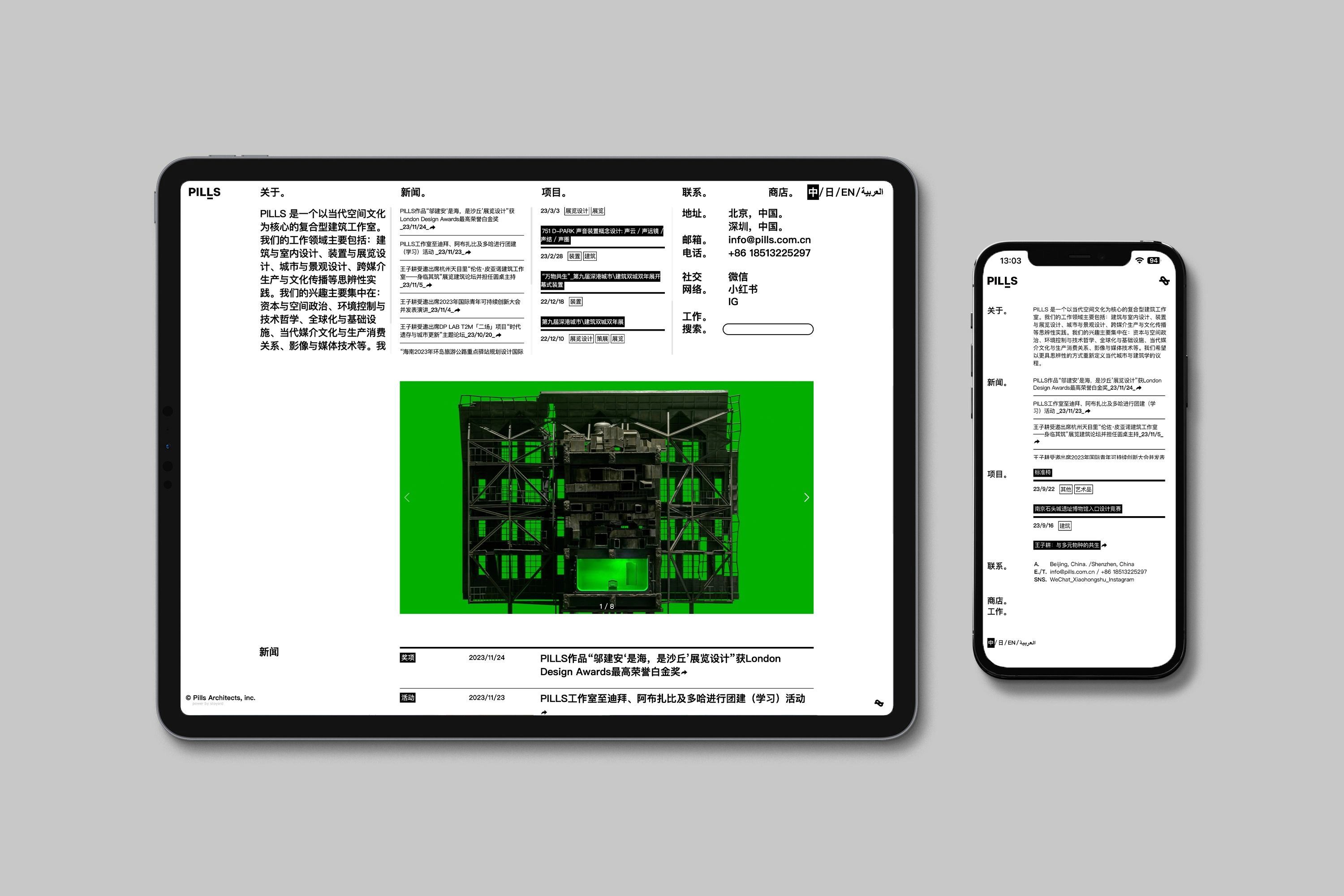 PILLS建筑事务所(STOYARD提供整体解决方案)构思巧妙:网站设计最打动人的地方,并不在于它用复杂的视觉技法制造冲击,而在于 stoyard 非常准确地抓住了 PILLS 作为建筑与空间研究实践者的气质:克制、清晰、国际化,并且带有持续思考的专业密度。把 PILLS 本身那种研究型、跨媒介、带有空间思辨气质的身份翻译成了网页语言。导航很轻,信息层级很清楚。 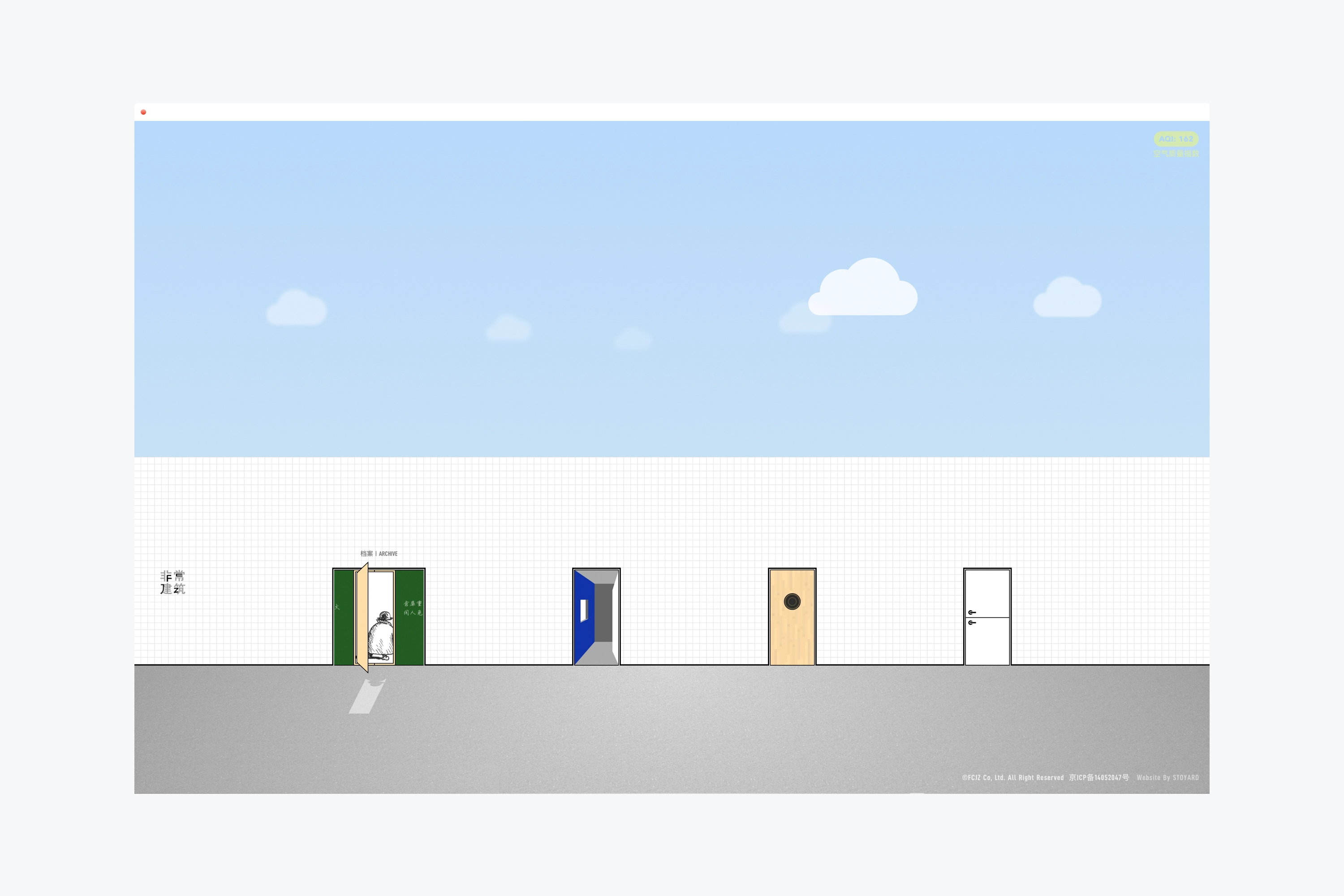 非常建筑/张永和(STOYARD提供整体解决方案)  朱小地建筑(STOYARD提供整体解决方案) #### 建筑不是一种只依赖瞬间注意力的行业。 社交媒体适合制造更泛的普通用户触达,适合快速传播,也适合让某个项目、某张图片在短时间里被看见。但建筑不是一种只依赖瞬间注意力的行业。一个建筑项目背后往往有复杂的场地条件、设计方法、建造过程、研究脉络和长期影响。仅仅依靠碎片化平台,很难完整呈现这些内容。平台可以让人“刷到”一个建筑事务所,但官网才能让人真正“理解”它。 这也是为什么一个具有深度内容和项目介绍的官网,仍然值得被投入大量资源。它不是一次性传播物料,而是一个长期资产。每一个项目介绍、每一篇研究文章、每一次新闻更新,都会沉淀成机构的知识档案和品牌资产。几年之后,这些内容不再只是“旧内容”,而会共同构成外界理解事务所方法论、审美判断和专业能力的依据。 对于中国建筑事务所来说,这一点尤其重要。过去很多优秀实践被平台化传播切碎了:项目图片被转发,获奖信息被摘录,建筑师观点被压缩成几句话。但真正能体现事务所价值的,往往不是结果图,而是它如何面对复杂问题,如何回应场地、城市、文化和技术条件。一个认真运营的官网,正是重新夺回叙事完整性的方式。 #### 建筑类设计类的独立官网还有一个平台无法替代的优势:它属于事务所自己。 社交媒体的规则会变化,推荐机制会变化,账号权重会变化,内容格式也会变化。但官网是一个更自主的空间。事务所可以决定什么内容重要,如何组织项目,如何呈现研究,如何建立多语言系统,如何让媒体、业主、同行和国际访问者进入自己的工作脉络。这种自主性,对一个以长期声誉为核心的专业机构来说非常关键。 所以,投入当然巨大。深度官网不是买一个模板、放几张图、写几段介绍就能完成的。它需要内容梳理、项目编辑、视觉设计、技术开发、影像管理、翻译、多语言维护和持续运营。但也正因为投入巨大,它才真正形成门槛。不是所有事务所都愿意做,也不是所有事务所都有足够内容支撑它。愿意投入,反而说明这个机构对自己的专业表达有要求,也对未来的国际传播和长期品牌建设有判断。 放到 PILLS 这个案例里,stoyard 做的价值就在于它没有把官网当作一个“展示页面”,而是把它建设成 PILLS 的数字档案、专业界面和公共叙事空间。Works、Research、News 这些板块共同构成了一个持续更新的系统:项目不是孤立的案例,研究不是附属内容,新闻也不只是动态记录,而是共同指向一个更完整的机构形象。 因此,这样的投入当然值得。因为一个优秀建筑事务所真正需要的,不只是被更多人看见,而是被正确地理解。社交平台解决的是曝光问题,深度官网解决的是信任、判断和长期记忆的问题。 #### 在 2026 年,一个优秀建筑事务所建设深度官网,并不是逆流而行,而是在流量时代重新建立自己的叙事主权。它不只是为了展示项目,而是为了保存方法、组织思想、建立信任,并让那些真正重要的专业内容,不被平台算法和碎片化传播轻易稀释。** #### 另外: ** 如果说过去官网的价值主要是 品牌展示、项目归档、媒体查询、客户信任**,那么到 2026 年,深度官网又多了一层新的意义:它会成为建筑事务所在 AI 搜索、生成式问答和 GEO 里的“原始知识源”。 这里的 GEO,一般指 Generative Engine Optimization**,也就是面向 ChatGPT Search、Google AI Overviews、Perplexity、Gemini 这类生成式搜索结果的内容可见性优化。2023 年的相关研究已经把它定义为一种帮助内容在生成式引擎回答中获得更高可见度的新范式;Google AI Overviews 和 ChatGPT Search 也都强调 AI 回答会连接到网页来源,OpenAI 还明确提到网站需要允许其搜索爬虫访问,才更有机会被纳入搜索来源。参考:[GEO 论文](https://arxiv.org/abs/2311.09735)、[Google AI Overviews](https://www.search.google/ways-to-search/ai-overviews/)、[ChatGPT Search 说明](https://help.openai.com/en/articles/9237897-chatgpt-search)。 所以,深度官网的意义就变了。它不只是给“人”看的,也是给未来的信息系统、搜索引擎和 AI 代理理解一个事务所用的。 #### 具体为什么有帮助?** #### 第一,大量自有内容会帮助 AI 建立更完整的“实体理解”。 AI 搜索不只是匹配关键词,它会试图理解一个机构是什么、做过什么、擅长什么、与哪些城市、类型、议题、人物、奖项和研究方向相关。一个只有首页和几张项目图的网站,很难让 AI 建立稳定认知。但如果官网长期积累了项目介绍、研究文章、新闻动态、团队信息、多语言内容和媒体引用,AI 就更容易把这个事务所识别为一个清晰的专业实体。 对于 PILLS 这样的建筑事务所来说,这尤其重要。它不只是“做建筑设计”,还涉及空间研究、当代文化、城市议题、展览、公共表达等复杂面向。只有官网里有足够深度的内容,AI 才能理解它不是一个普通设计供应商,而是一个有方法论、有研究线索、有持续议题的建筑实践机构。 #### 第二,深度项目页会让事务所进入更多长尾问题的答案里。 未来用户不一定会搜索“PILLS 建筑事务所官网”。他们可能会问: “有哪些中国建筑事务所关注空间研究?” “谁做过具有实验性的城市更新项目?” “上海有哪些年轻建筑事务所有国际传播能力?” “哪个中国建筑事务所同时做建筑实践和研究出版?” “某个项目是谁设计的,它的设计理念是什么?” 如果官网里没有完整内容,AI 很可能引用第三方媒体、奖项页面、转载文章,甚至生成一个不准确的概括。但如果官网本身有结构清晰、信息充分、持续更新的项目资料,它就更有机会成为 AI 回答时的优先参考源。 #### 第三,自有内容能降低“被别人定义”的风险。 在 AI 搜索时代,最危险的不是没人提到你,而是系统用不完整、过期或二手的信息来概括你。建筑事务所的价值很容易被简化成“做过某个项目”“获得某个奖”“风格偏极简”。但这往往不是事务所真正想表达的核心。 官网提供的是一种叙事主权。你可以自己定义项目名称、设计逻辑、研究背景、关键词、团队角色、时间线、图片顺序和语言版本。AI 系统在抓取和理解信息时,如果能读到来自官网的一手内容,就更可能沿着事务所自己设定的叙事去理解它。 #### 第四,多语言内容会扩大 AI 对事务所的跨语境识别。 PILLS 官网有多语言入口,这一点在 GEO 里非常重要。中文内容可以服务国内媒体、客户和搜索环境;英文内容有助于国际建筑媒体、策展人、院校、奖项和海外客户理解;日文、阿语等语言则进一步增加了跨区域传播的可能性。 AI 搜索未来很可能是跨语言的。一个用户用英文提问“中国有哪些建筑事务所关注 contemporary spatial culture”,系统可能会从中文、英文乃至其他语言内容中综合判断。多语言官网不是简单翻译,而是在为不同语言环境里的 AI 索引建立入口。 #### 第五,持续更新的官网会形成“时间上的可信度”。 AI 搜索很重视内容的新鲜度和稳定性。一个多年不更新的网站,会被系统视为弱信号;一个持续发布项目、研究、新闻和媒体信息的网站,则会形成稳定的活跃度。对建筑事务所来说,这种更新不是为了追热点,而是为了证明机构仍在持续工作、持续思考、持续产生内容。 #### 所以,News 和 Research 这类的栏目并不是附属功能。它们会让官网从静态作品集变成一个持续生长的知识库。  在 AI 搜索和生成式问答逐渐成为信息入口之后,建筑事务所官网的价值正在被重新定义。它不再只是一个面向访问者的展示页面,也会成为 AI 系统理解、引用和推荐事务所的重要知识源。大量自有内容、完整项目介绍、研究文章、多语言信息和持续更新的新闻动态,都会帮助 AI 更准确地识别一个事务所的专业方向、项目经验和思想结构。** 未来,一个建筑事务所如果没有自己的深度官网,就很可能只能被平台、媒体转载和 AI 的二手概括所定义。而一个长期运营的官网,则是在为 AI 搜索时代建立自己的原始语料、权威出处和叙事主权。** #### 所以回到最开始的问题: 这种投入大不大?很大。值不值?非常值。因为它表面上是在建设官网,实际上是在建设三件事:品牌资产、知识资产、AI 时代的可见性资产。** ** ## English Content > In 2026, why should an outstanding Chinese architectural firm still invest substantial resources in developing a comprehensive, in-depth official website? ### With the rise of AI in 2026, is China's top architecture firm worth investing a lot of resources to sort out projects, design and operate a deep content firm official website?** First the conclusion: it's worth it. Even beyond 2026, the more worthwhile.** Because for an excellent architectural firm, the value of the official website is not just an "online business card". It is the most stable, most complete, and least dependent on the public expression system of the platform algorithm.  PILLS Architects (STOYARD to provide a total solution) is ingeniously conceived: the most touching part of website design is not that it uses complex visual techniques to create impact, but that stoyard accurately capture PILLS's temperament as a practitioner of architectural and spatial research: restraint, clarity, internationalization, and professional density with continuous thinking. The identity of PILLS itself, which is research-oriented, cross-media and has spatial speculative temperament, is translated into web language. The navigation is light and the information hierarchy is clear.  Very Architecture/Zhang Yonghe (STOYARD to provide overall solution)  Zhu Xiaodi Construction (STOYARD to provide overall solutions) #### Architecture is not a business that relies only on momentary attention. Social media is suitable for making more general users reach, for rapid dissemination, and for allowing an item or a picture to be seen in a short period of time. But architecture is not a business that relies only on momentary attention. A construction project often has complex site conditions, design methods, construction process, research context and long-term impact. It is difficult to fully present these contents only by relying on fragmented platforms. The platform can let people "brush" an architectural firm, but the official website can let people really "understand" it. This is why a website with in-depth content and project introduction is still worth investing a lot of resources. It is not a one-time dissemination of materials, but a long-term asset. Every project introduction, every research article, every news update, will precipitate into the organization's knowledge archive and brand equity. In a few years, this content will no longer be just "old content", but will collectively form the basis for external understanding of the firm's methodology, aesthetic judgment and professional competence. This is especially important for Chinese architecture firms. In the past, many good practices were shredded by platform communication: project pictures were forwarded, award information was extracted, and architect's views were compressed into a few sentences. But what really reflects the value of the firm is often not the result map, but how it faces complex problems and how it responds to the site, city, culture and technical conditions. A serious operation of the official website, is the way to regain the integrity of the narrative. #### The independent website of architectural design also has an irreplaceable advantage: it belongs to the firm itself. The rules of social media will change, the recommendation mechanism will change, the account weight will change, and the content format will change. But the official website is a more autonomous space. Firms can decide what content is important, how to organize projects, how to present research, how to build multilingual systems, and how to bring media, owners, peers and international visitors into their work. This autonomy is crucial for a professional organization with a long-term reputation at its core. So, of course, the investment is huge. In-depth official website cannot be completed by buying a template, putting a few pictures and writing a few introductions. It requires content grooming, project editing, visual design, technology development, image management, translation, multilingual maintenance and ongoing operations. But it is also because of the huge investment that it really forms the threshold. Not all firms are willing to do it, and not all firms have enough content to support it. Willing to invest, on the contrary, shows that this organization has requirements for its own professional expression, and also has judgments on future international communication and long-term brand building. In the case of PILLS, the value of stoyard is that it does not use the official website as a "display page", but builds it into PILLS's digital archive, professional interface and public narrative space. Works, Research and News together form a continuously updated system: projects are not isolated cases, research is not subsidiary content, and news is not just a dynamic record, but a common point to a more complete image of the organization. That investment is certainly worth it. Because what a good architectural firm really needs is not just to be seen by more people, but to be correctly understood. The social platform solves the problem of exposure, and the deep website solves the problems of trust, judgment and long-term memory. #### In 2026, an excellent architectural firm will build a deep official website, not against the current, but to re-establish its own narrative sovereignty in the era of traffic. It's not just about showcasing projects, it's about preserving methods, organizing ideas, building trust, and keeping the professional content that really matters from being diluted by platform algorithms and fragmented communication.** #### In addition: ** If the value of the official website in the past is mainly Brand display, project archiving, media inquiry, customer trust**By 2026, in-depth official website will have a new meaning: it will become the "original knowledge source" for architectural firms in AI search, generative Q & A and GEO ". GEO here, generally refers 创成式发动机优化**, that is, content visibility optimization for generated search results such as ChatGPT Search, Google AI Overviews, Perplexity, and Gemini. Relevant research in 2023 has defined it as a new paradigm to help content gain higher visibility in generative engine answers. Google AI Overviews and ChatGPT Search also emphasize that AI answers will be connected to web sources. OpenAI also explicitly mentioned that websites need to allow their search crawlers to visit before they have a better chance of being included in search sources. Reference:[GEO Papers](https://arxiv.org/abs/2311.09735)、[谷歌人工智能概览](https://www.search.google/ways-to-search/ai-overviews/)、[ChatGPT Search Instructions](https://help.openai.com/en/articles/9237897-chatgpt-search)。 So, the meaning of the depth of the official website has changed. It is not only for "people", but also for future information systems, search engines and AI agents to understand a transaction. #### Why specifically help?** #### First, a large amount of self-owned content will help AI build a more complete "understanding of the entity". AI search isn't just about matching keywords, it's about trying to understand what an institution is, what it does, what it's good at, what cities, types, issues, people, awards, and research directions are relevant. A website with only a home page and a few project maps is difficult for AI to establish stable cognition. However, if the official website has accumulated project introductions, research articles, news trends, team information, multilingual content and media citations over a long period of time, it will be easier for AI to identify the firm as a clear professional entity. This is especially important for architectural firms like PILLS. It is not only "doing architectural design", but also involves spatial research, contemporary culture, urban issues, exhibitions, public expression and other complex aspects. Only when there is enough depth in the official website can AI understand that it is not an ordinary design supplier, but an architectural practice organization with methodology, research clues and continuous issues. #### Second, the in-depth project page will allow the firm to enter the answers to more long-tail questions. Future users will not necessarily search for "PILLS Architects website". They may ask: "Which Chinese architecture firms focus on space research?" "Who has done an experimental urban renewal project?" "Which young architecture firms in Shanghai have international communication capabilities?" "Which Chinese architecture firm does both architectural practice and research publishing?" "Who designed a certain project and what is its design philosophy?" If there is no complete content in the official website, AI are likely to quote third-party media, award pages, reprint articles, or even generate an inaccurate summary. However, if the official website itself has clearly structured, well-informed, and continuously updated project materials, it has a better chance of becoming a preferred reference source for AI answers. #### Third, own content can reduce the risk of being "defined by others. In the age of AI search, the most dangerous thing is not that no one mentions you, but that the system summarizes you with incomplete, outdated or second-hand information. The value of an architectural firm can easily be reduced to "doing a project", "winning a prize" and "minimalist style". But this is often not the core of what the firm really wants to express. The official website provides a kind of narrative sovereignty. You can define your own project name, design logic, research background, keywords, team roles, timeline, picture order, and language version. When AI systems capture and understand information, if they can read first-hand content from the official website, they are more likely to understand it along the narrative set by the firm itself. #### Fourth, multilingual content will expand the AI's cross-contextual recognition of the firm. The PILLS website has a multilingual portal, which is very important in GEO. Chinese content can serve domestic media, customers and search environment; English content is helpful for international architectural media, curators, colleges, awards and overseas customers to understand; Japanese, Arabic and other languages further increase the possibility of cross-regional communication. The future of AI search is likely to be cross-language. A user asks in English "which architecture firms in China are concerned about contemporary spatial culture", and the system may make a comprehensive judgment from the content of Chinese, English and even other languages. Multilingual official website is not a simple translation, but a portal for AI indexes in different language environments. #### Fifth, the continuously updated official website will form "time credibility"