# Banov酒店品牌全案,很多设计决策,并不是在屏幕上完成的 - ID: 80 - URL: https://www.stoyard.com/viewpoint/80 - English URL: https://www.stoyard.com/en/viewpoint/80 - Category: 客户故事 - English Category: Customer Story - English Title: Many design decisions are not made on the screen. ## 中文主体 > 我们会把方案带到真实的材料、色彩与空间环境中反复比较,从视觉关系、材质质感到最终呈现效果,一点点校准细节 ### 设计不是在屏幕上完成的,而是在真实环境里被证明的  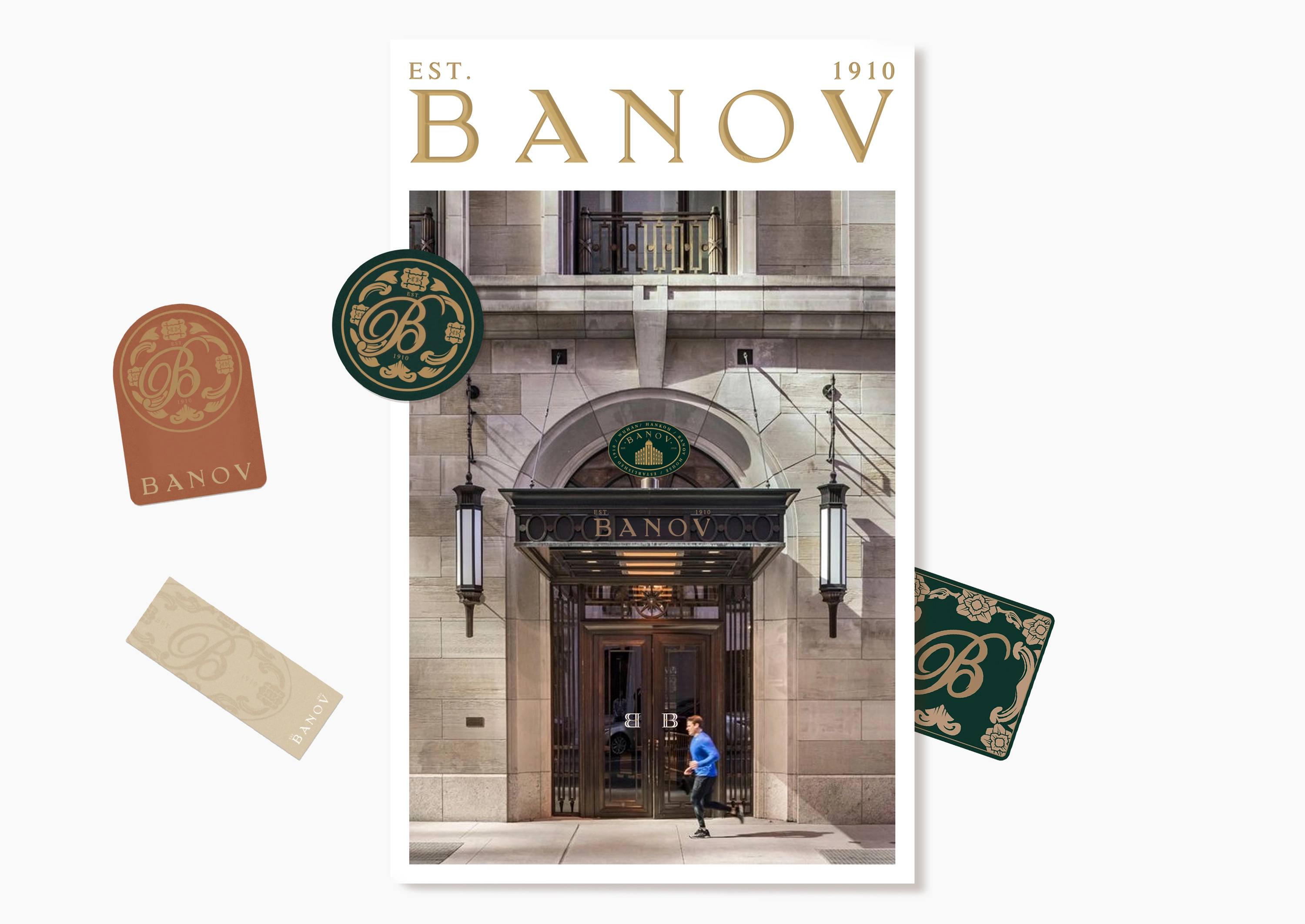 屏幕可以模拟颜色、比例和质感,却无法替代真实的光线、材料、尺度与工艺。一个方案在效果图里成立,不代表它被制造出来、进入空间并被实际使用之后仍然成立。  工作现场:团队结合电脑方案、印刷色样与材料样本进行比较。设计判断需要在屏幕信息与真实物理效果之间来回校准。 **没有经过真实环境验证的方案,只是视觉假设。**设计工作的专业性,不只体现在提出创意,更体现在愿意让创意接受现实条件的检验,并在一次次比较和校准中守住最终品质。 #### #### 1. 屏幕上的正确,可能只是被显示器保护起来的正确 在数字界面中,颜色处于相对稳定的发光环境,尺寸可以自由缩放,材质可以通过渲染模拟,画面也总能以最理想的角度被观看。现实世界却不会配合效果图。 同一种颜色进入不同纸张、涂料、织物或金属表面,会产生完全不同的明度与质感;同一组比例进入真实空间,可能因为距离、光线和人的移动而失去原本的层级;屏幕上精致的细节,在生产工艺面前也可能无法稳定实现。 **设计软件能够帮助我们提出方案,却不能替我们证明方案。**如果团队只在屏幕上完成判断,许多问题不会消失,只会被推迟到制作、安装甚至正式使用之后暴露。 #### #### 2. 验证不是项目末端的检查,而是设计过程的一部分 在 STOYARD,我们会把方案带到真实材料、色彩与空间环境中反复比较。团队围绕视觉关系、材质质感、尺寸比例、表面处理和最终呈现效果逐项判断,必要时通过色样、材料样本与制作测试不断缩小偏差。 这种工作看起来并不戏剧化。很多时候,讨论的只是两种接近的颜色、同一材料的不同表面效果,或一个细微的尺寸调整。但最终品质恰恰由这些看似微小、却会被真实环境放大的选择共同构成。 **验证不是为了证明最初方案没有问题,而是尽早发现它在哪里会失效。**愿意推翻屏幕上的“完美”,比维护一张漂亮效果图更接近专业。 #### #### 3. 颜色、材料和尺度,必须放回关系中判断 颜色从来不是一个孤立的色值。它会受到周围颜色、环境照明、材料吸收与反射方式的共同影响。材料也不是一张纹理贴图,它具有重量、触感、边缘、拼接方式和耐久性。尺度更不是画板上的数字,而是人与物、空间和观看距离之间的关系。 因此,单独看一个色样或材料往往不够。设计需要把它们放回组合关系和使用场景中:主色是否仍然准确,辅助色是否抢夺信息,表面处理是否符合品牌气质,近距离细节与远距离识别是否同时成立。 **好的落地不是把效果图复制出来,而是在真实约束中重新建立同样清晰的视觉关系。**形式可以因工艺而调整,但设计意图不能在调整中被逐步稀释。 #### #### 4. 设计品质不是设计师单方面控制出来的 从概念走向落地,设计会进入一个更复杂的协作系统:客户团队、设计师、项目管理、制作供应商、工程与安装人员都会参与其中。任何一段沟通断裂,都可能让前期判断在后续执行中逐渐变形。 成熟完整的交付,不只是发送设计文件和标注尺寸,还包括解释判断依据、明确不可妥协的关键点、识别可调整的空间,并在制作过程中持续回应现实问题。  工作现场:围绕色彩样本、视觉方案与实施条件进行协同讨论。落地品质来自共同判断,而不是文件的单向传递。 **如果设计意图只能由设计师本人解释,它就还没有成为可执行的系统。**真正可靠的方案,需要让不同角色理解目标、判断优先级,并在变化发生时做出方向一致的选择。 #### #### 5. 文件交付不是完成,真实使用才是 设计项目最容易制造一种虚假的完成感:提案通过了,文件发出了,制作开始了,于是设计似乎已经结束。但对最终使用者来说,设计直到被看见、被触摸、被操作的那一刻才真正开始。 因此,我们评价一件作品是否完成,不只看它与方案图是否相似,而要继续追问:真实光线下是否仍然准确?长时间使用是否舒适?制作细节是否稳定?不同媒介之间是否保持一致?它是否仍然表达了最初希望建立的品牌气质与体验秩序? **“像效果图”不是最高标准。比方案阶段更完整、更准确,也更经得起使用,才是设计落地真正应当追求的结果。** #### #### 6. 专业不是把流程做复杂,而是减少结果中的侥幸 打样、比较、测试和校准都会增加过程中的工作量,但它们的目的不是展示流程有多繁复,而是把风险尽可能提前,把关键选择从“应该差不多”变成有依据的判断。 对于品牌、空间与数字体验项目,这种工作方式能够带来三类长期价值: 1. 减少落地偏差。**在批量制作或正式上线前识别问题,避免错误被规模化复制。 2. 保护品牌一致性。**让颜色、材料、版式与体验在不同媒介和环境中仍然表达同一种品牌气质。 3. 提高协作确定性。**通过清晰的判断依据和持续沟通,减少客户、设计与执行团队之间的反复猜测。 ### **设计的完成,不是文件离开电脑,而是品质进入现实。** 创意决定了一件作品可能到达哪里,验证与执行则决定它最终真正到达哪里。前者提供方向,后者建立可信度,两者缺一不可。 对 STOYARD 来说,专业不是把简单的事情包装得复杂,而是对每一个会影响最终结果的选择保持足够认真。我们希望交付的,不是一张只在屏幕上成立的图,而是一套进入真实材料、空间和使用场景之后,仍然完整、准确并有品质的设计结果。 ## English Content > We will bring the scheme to the real material, color and space environment for repeated comparison, from the visual relationship, material texture to the final presentation effect, a little bit of calibration details ### Design is not done on a screen, but is proven in a real environment. Screens can simulate color, scale and texture, but they cannot replace real light, materials, scale and craftsmanship. The fact that a scheme is established in an effect diagram does not mean that it will still be established after it has been manufactured, entered into space and actually used.  Job site: The team combines computer solutions, printed color samples and material samples for comparison. Design judgments need to be calibrated back and forth between screen information and real physical effects. **There are no real-environment validated scenarios, just visual assumptions.**The professionalism of design work is not only reflected in the idea, but also in the willingness to let the idea accept the test of realistic conditions, and keep the final quality in the comparison and calibration.  From "scheme judgment" to "real verification" and then to "quality delivery", the design must complete the transformation from visual assumption to real result. #### #### 1. The correct on the screen may only be protected by the display In the digital interface, the color is in a relatively stable luminous environment, the size can be freely scaled, the material can be simulated by rendering, and the picture can always be viewed at the most ideal angle. The real world does not match the renderings. When the same color enters different paper, paint, fabric or metal surfaces, it will produce completely different lightness and texture; when the same set of proportions enters the real space, it may lose its original level due to distance, light and people's movement; the delicate details on the screen may not be realized stably in front of the production process. **Design software can help us come up with a solution, but it can't prove it for us.**If the team only completes the judgment on the screen, many problems will not disappear, and will only be postponed until production, installation and even formal use. #### #### 2. Verification is not a check at the end of the project, but part of the design process In the STOYARD, we will bring the scheme to the real material, color and space environment for repeated comparison. The team judged the visual relationship, material texture, size ratio, surface treatment and final presentation effect item by item, and continuously reduced the deviation through color samples, material samples and production tests when necessary. This kind of work does not seem dramatic. Many times, the discussion is just two close colors, different surface effects of the same material, or a slight size adjustment. But the final quality is made up of these seemingly small choices that will be amplified by the real environment. **The purpose of verification is not to prove that there is no problem with the original scheme, but to find out where it will fail as soon as possible.**Willing to overturn the "perfect" on the screen is closer to the profession than maintaining a beautiful renderings. #### #### 3. Color, material and scale must be put back in the relationship to judge Color is never an isolated color value. It will be affected by the surrounding color, ambient lighting, material absorption and reflection. The material is not a texture map, it has weight, touch, edges, stitching and durability. Scale is not the number on the drawing board, but the relationship between people and things, space and viewing distance. Therefore, looking at a color sample or material alone is often not enough. The design needs to put them back into the combination relationship and usage scene: whether the main color is still accurate, whether the auxiliary color snatches information, whether the surface treatment conforms to the brand temperament, and whether the close-range details and the long-range identification are valid at the same time. **A good landing is not to copy the renderings, but to re-establish the same clear visual relationship in the real constraints.**The form can be adjusted due to the process, but the design intent cannot be gradually diluted in the adjustment. #### #### 4. Design quality is not unilaterally controlled by designers From concept to floor, design moves into a more complex collaborative system: customer teams, designers, project management, production suppliers, engineers and installers all participate. Any communication break may gradually deform the early judgment in the subsequent implementation. Mature and complete delivery, not only sending design documents and marking dimensions, but also explaining the basis for judgment, identifying key points that cannot be compromised, identifying adjustable spaces, and continuously responding to real-world problems during the production process.  Job site: Collaborative discussions around color samples, visual solutions and implementation conditions. The quality of landing comes from common judgment, not the one-way transmission of documents. **If the design intent can only be interpreted by the designer himself, it has not yet become an executable system.**A truly reliable solution requires different roles to understand the goals, judge priorities, and make consistent choices when changes occur. #### #### 5. Document delivery is not complete, real use is Design projects are most likely to create a false sense of completion: the proposal is passed, the documents are sent out, production begins, and the design seems to be over. But for the end user, design doesn't really begin until it's seen, touched, and manipulated. Therefore, we evaluate whether a work is completed, not only to see whether it is similar to the scheme diagram, but also to continue to ask: whether it is still accurate in real light? Is it comfortable to use for a long time? Is the production details stable? Is it consistent between different media? Does it still express the brand temperament and experience order that it originally hoped to establish? **"Like renderings" is not the highest standard. It is more complete, more accurate, and more able to withstand use than the plan stage, which is the result that the design should really pursue.** #### #### 6. The profession is not to complicate the process, but to reduce the fluke in the result. Proofing, comparison, testing, and calibration all add to the workload of the process, but their purpose is not to show how complicated the process is, but to advance the risk as much as possible and change the key choice from "should be almost" to a well-founded judgment. For brand, space and digital experience projects, this way of working can bring three types of long-term value: 1. Reduce landing deviation.**Identify problems before mass production or official launch to avoid errors being copied on a large scale. 2. Protect brand consistency.**Let the color, material, format and experience in different media and environment still express the same brand temperament. 3. Improve collaboration certainty.**Reduce back-and-forth between customers, design and execution teams through clear judgment and continuous communication. ### **The completion of the design is not the file leaving the computer, but the quality entering the reality.** Creativity determines where a work may go, and verification and execution determine where it actually ends. The former provides direction and the latter establishes credibility, both of which are indispensable. For STOYARD, the profession is not about packaging simple things into complexity, but about being serious enough about every choice that will affect the end result. What we want to deliver is not a picture that is only established on the screen, but a complete, accurate and quality design result after entering the real material, space and usage scene.