# 我们的艺术立场:像艺术家那样思考 - ID: 79 - URL: https://www.stoyard.com/viewpoint/79 - English URL: https://www.stoyard.com/en/viewpoint/79 - Category: 设计思维 - English Category: Design Thinking - English Title: Our Artistic Position: Think Like an Artist ## 中文主体 > 当设计越来越依赖数据、效率与算法时,艺术思维或许正成为设计师最重要的竞争力。它不仅关乎美感,更关乎创造新的可能性。  欢集FUNJI 品牌识别、网页、APP设计(STOYARD项目) 过去二十年,设计行业经历了一场持续的专业化进程。 用户研究、设计系统、数据分析、A/B测试、增长模型……越来越多的方法论被引入设计领域。设计逐渐从一种依赖直觉和经验的创作活动,演变为一门强调逻辑、效率和可验证结果的专业学科。 这种变化带来了许多积极影响。设计决策变得更加理性,设计流程更加规范,企业也能够通过数据评估设计的实际价值。然而当行业越来越强调解决问题时,另一个问题也开始浮现:如果设计只剩下效率与优化,它是否会逐渐失去创造新的可能性? 在生成式AI迅速发展的今天,这个问题显得尤为重要。 ### ### 设计从来不只是解决问题,设计是最具影响力的艺术形式之一 关于设计与艺术的关系,行业里一直存在一种流行观点:设计负责解决问题,艺术负责表达自我。因此设计是理性的,而艺术是感性的;设计追求功能,艺术追求表达。 但回顾设计史会发现,两者之间从来没有真正清晰的边界。 从包豪斯运动开始,现代设计就建立在艺术、技术与功能融合的基础之上。无论是 Paul Rand、Saul Bass、Milton Glaser,还是 Massimo Vignelli,他们的作品之所以能够跨越时代持续影响后来者,并不仅仅因为它们有效地完成了某项功能,而是因为这些作品同时具备文化意义、情感力量与鲜明的创造性表达。 事实上,人们记住的往往不是设计解决了什么问题,而是它带来了怎样的感受。那些真正伟大的设计,既能够完成任务,也能够触动人心。 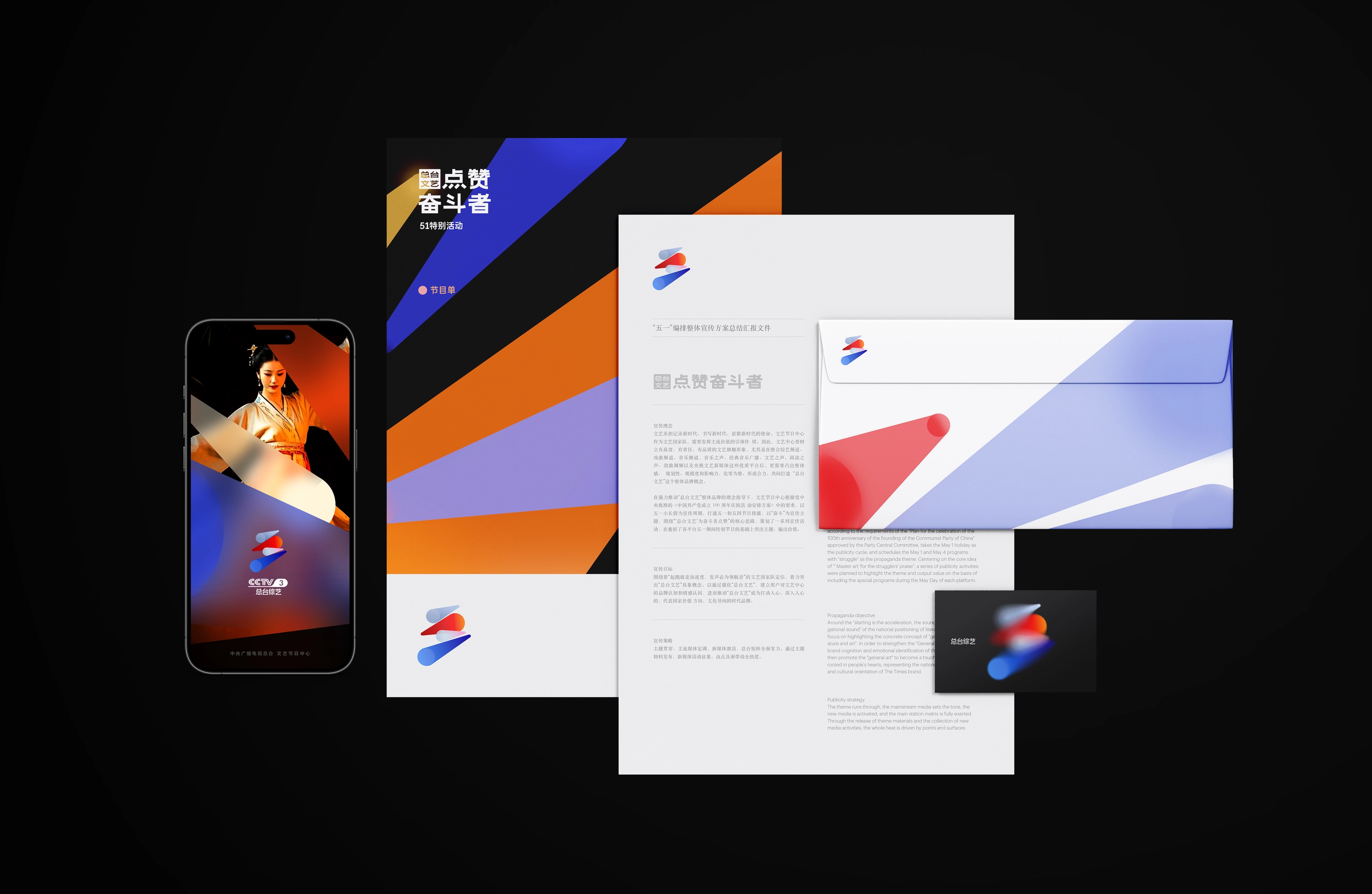 CCTV总台综艺新媒体形象升级·设计咨询(STOYARD项目) ### ### ### 为什么越来越多设计开始变得相似? 今天的设计行业比过去任何时候都更依赖数据。 企业希望通过用户研究降低风险,希望通过市场测试验证方向,希望通过指标衡量效果。这些方法本身并没有问题,它们帮助设计建立了更加科学的决策机制。当所有决策都试图寻找最安全答案时,设计也开始变得越来越趋同。我们越来越容易看到类似的界面、类似的品牌表达、类似的视觉风格。因为数据擅长优化已有方案,却很难创造从未出现过的新事物。市场研究能够告诉我们用户喜欢什么,却无法告诉我们未来可能喜欢什么。 广告大师 Bill Bernbach 曾说过:“规则是艺术家打破的,令人难忘的作品从未诞生于公式。”很多时候,真正推动设计进步的并不是数据,而是那些最初看起来不够合理、甚至带有风险的大胆尝试。 ### AI正在加速设计的标准化,那么如何对用户审美做预测 AI已经能够生成视觉方案、撰写文案、制作原型甚至编写代码。许多过去需要数小时完成的工作,现在只需几分钟即可完成。对于设计行业而言,这无疑是一场巨大的效率革命。AI的能力本质上建立在已有数据之上。它通过学习海量已有作品生成新的内容,因此它最擅长的是总结规律、提炼模式和复现风格。换句话说,AI能够高效生成“合理”的设计,却很难主动创造尚未存在的表达方式。 如果未来的设计工作完全依赖算法与数据,那么行业很可能进入一个高度标准化的阶段。作品会越来越成熟、越来越高效,但也可能越来越缺乏个性与惊喜。 这也是为什么,随着AI能力不断提升,艺术思维反而变得更加重要。 ### 艺术思维真正提供了什么? 艺术思维并不意味着放弃理性,也不意味着拒绝商业目标。它更像是一种看待世界的方式。 艺术家往往会主动挑战既有认知,质疑习以为常的规则,并尝试寻找新的表达路径。他们关注的不只是事情如何运作,更关注事情为什么存在,以及是否存在另一种可能。因为设计从来不是简单地执行需求,而是在复杂约束中寻找新的解决方案。当所有人都遵循同样的方法和逻辑时,真正的创新往往来自那些愿意突破惯性的思考方式。 艺术思维带来的价值,是让设计保持探索未知的能力。 ### 未来设计师最重要的能力,大概率不是设计能力本身 如果回顾设计行业的发展历程,会发现设计师的价值始终在变化。早期设计师依靠视觉表达能力建立优势;互联网时代,设计师开始掌握交互与用户体验;而今天,越来越多执行层面的工作正在被工具和AI辅助完成。真正重要的能力,正在转向判断、洞察和创造新的意义。设计师需要理解商业、文化、技术与人性之间的关系,需要能够发现别人没有发现的问题,并提出新的可能性。 这些能力很难被流程化,也难以被自动化取代。而它们恰恰与艺术家长期具备的能力高度一致。 STOYARD Insight ### “艺术立场”作为我们核心的价值观之一:在过去多年的沉淀中,我们不断使用“艺术立场”结合具体的客户体验场景,深度讨论设计系统、增长模型、数据驱动设计以及AI辅助创作。这些工具和方法正在帮助设计行业变得更加高效,也让设计拥有了前所未有的生产能力。 ### 效率从来不是设计的最终目的。 ### ### 当越来越多设计工作能够被标准化和自动化时,设计师将不在局限在执行本身。AI能够帮助我们找到最合理的答案,能够生成符合规律的设计,却很难提出从未被提出过的问题,也暂时无法真正理解文化、情感与人类的体验。  Keywords 设计思维、艺术思维、AI设计、创造力、设计师成长、生成式AI、数字体验、设计战略、未来工作方式、创意产业 Category AI趋势 / 设计思考 / 创造力 / 工作方式 URL Slug why-designers-need-artist-thinking-in-ai-era ## English Content > As design increasingly relies on data, efficiency and algorithms, artistic thinking may be the most important competitiveness of designers. It's not just about beauty, it's about creating new possibilities.  FunJI Brand Identity, Website, and App Design (STOYARD Project) Over the past two decades, the design industry has undergone a sustained process of professionalization. User research, design systems, data analytics, A/B testing, growth models… an increasing number of methodologies are being introduced into the design field. Design has gradually evolved from a creative practice rooted in intuition and experience into a professional discipline that emphasizes logic, efficiency, and verifiable outcomes. This change has brought about many positive effects. Design decisions have become more rational, the design process has been standardized, and companies can now assess the actual value of their designs using data. However, as the industry increasingly prioritizes problem-solving, another question has begun to emerge: if design is reduced to mere efficiency and optimization, will it gradually lose its capacity to generate new possibilities? In today’s rapidly advancing era of generative AI, this issue has become particularly important. ### ### Design has never been merely about solving problems; it is one of the most influential art forms. Regarding the relationship between design and art, a widely held view in the field holds that design is tasked with solving problems, while art is devoted to self-expression. Therefore, design is rational, while art is emotional; design seeks functionality, and art seeks expression. However, a review of design history reveals that the two have never had truly clear boundaries. Since the Bauhaus movement, modern design has been founded on the integration of art, technology, and function. Whether it be Paul Rand, Saul Bass, Milton Glaser, or Massimo Vignelli, the reason their work has endured across generations and continued to inspire those who came after is not merely that it fulfilled a particular function; rather, it is because these works possess cultural significance, emotional resonance, and a distinctive, creative voice. In fact, what people remember is often not the problems a design solved, but the emotions it evoked. Truly great designs not only get the job done but also touch the heart.  CCTV’s Variety New Media Image Upgrade – Design Consulting (STOYARD Project) ### ### ### Why are more and more designs starting to look alike? Today, the design industry relies on data more than ever before. Companies seek to mitigate risks through user research, validate their strategic direction via market testing, and measure outcomes using key performance indicators. These methods are not inherently problematic; they help design establish a more scientifically grounded decision-making framework. As every decision seeks the safest option, design is increasingly converging toward uniformity. We are increasingly seeing similar interfaces, similar brand expressions, and similar visual styles. Because data excels at optimizing existing solutions but struggles to create entirely new, unprecedented innovations. Market research can tell us what users like, but it cannot tell us what they might come to like in the future. Advertising guru Bill Bernbach once said, “Rules are meant to be broken by artists; no memorable work has ever been born from a formula.” More often than not, it is not data but bold experiments—those that initially seem impractical or even risky—that truly drive design forward. ### AI is accelerating the standardization of design, so how can we predict users’ aesthetic preferences? AI has already been able to generate visual designs, write copy, create prototypes, and even code. Many tasks that once took hours to complete can now be finished in just a few minutes. For the design industry, this is undoubtedly a massive efficiency revolution. AI’s capabilities are fundamentally built upon existing data. It generates new content by learning from a vast corpus of existing works, and as such, it excels at identifying patterns, extracting models, and replicating styles. In other words, AI can efficiently generate “reasonable” designs, but it finds it difficult to proactively create modes of expression that do not yet exist. If future design work were to rely entirely on algorithms and data, the industry would likely enter a highly standardized phase. The work will become increasingly mature and efficient, but it may also grow increasingly devoid of individuality and surprise. This is also why, as AI capabilities continue to improve, artistic thinking has become even more important. ### What does artistic thinking truly offer? Artistic thinking does not entail abandoning reason, nor does it mean rejecting commercial objectives. It’s more like a way of looking at the world. Artists often proactively challenge established ways of knowing, question long‑taken‑for‑granted norms, and seek out new avenues of expression. They are concerned not only with how things work, but also with why they exist and whether another possibility might exist. Because design has never been merely about implementing requirements; it is, rather, about discovering innovative solutions within complex constraints. When everyone follows the same methods and logic, true innovation often emerges from those who are willing to break free from conventional ways of thinking. The value of artistic thinking lies in enabling design to sustain its capacity to explore the unknown. ### In the future, the most crucial skill for designers will likely not be design expertise itself. If we look back at the evolution of the design industry, we can see that the value of designers has consistently shifted over time. In the early days, designers leveraged their visual communication skills to gain an edge; in the internet era, they began mastering interaction and user experience; today, however, an increasing number of execution‑level tasks are being handled with the aid of tools and AI. The abilities that truly matter are shifting toward judgment, insight, and the creation of new meaning. Designers must understand the interplay among business, culture, technology, and human nature; they must be able to identify problems that others have overlooked and propose new possibilities. These capabilities are difficult to standardize into processes and hard to replace with automation. And they happen to align closely with the abilities that artists have long possessed. 斯托亚德洞察 ### “As one of our core values, the ‘artistic stance’ has, over many years, been consistently applied to specific customer‑experience scenarios, driving in‑depth discussions on design systems, growth models, data‑driven design, and AI‑assisted creation.” These tools and methodologies are making the design industry more efficient and enabling it to achieve unprecedented levels of production capacity. ### Efficiency has never been the ultimate goal of design. ### ### As more and more design tasks become standardized and automated, designers will no longer be confined to execution alone. AI can help us find the most reasonable answers and generate designs that conform to established patterns, but it struggles to pose questions that have never been asked before and, for now, remains unable to truly understand culture, emotions, and human experience.  关键词 Design thinking, artistic thinking, AI design, creativity, designer growth, generative AI, digital experience, design strategy, future ways of working, creative industries 类别 AI Trends/Design Thinking/Creativity/Ways of Working URL语义片段 为什么设计师在人工智能时代需要艺术家的思维