# 我们的艺术立场:像艺术家那样思考 - ID: 79 - URL: https://www.stoyard.com/insights/79 - English URL: https://www.stoyard.com/en/insights/79 - Category: 设计思维 - English Category: Design Thinking - English Title: Our Artistic Position: Think Like an Artist ## 中文主体 > 当设计越来越依赖数据、效率与算法时,艺术思维或许正成为设计师最重要的竞争力。它不仅关乎美感,更关乎创造新的可能性。 ## 过去二十年,设计行业经历了一场持续的专业化进程。用户研究、设计系统、数据分析、A/B 测试、增长模型……越来越多方法论被引入设计领域,设计逐渐从依赖直觉和经验的创作活动,演变为一门强调逻辑、效率和可验证结果的专业学科。 这种变化带来了许多积极影响:设计决策更加理性,设计流程更加规范,企业也能够通过数据评估设计的实际价值。然而当行业越来越强调解决问题时,另一个问题也开始浮现:**如果设计只剩下效率与优化,它是否会逐渐失去创造新可能性的能力?** 在生成式 AI 迅速发展的今天,这个问题显得尤为重要。  欢集 FUNJI 品牌识别、网页、APP 设计(STOYARD 项目) ## 设计从来不只是解决问题,它是最具影响力的艺术形式之一 关于设计与艺术的关系,行业里一直存在一种流行观点:设计负责解决问题,艺术负责表达自我;设计是理性的,艺术是感性的;设计追求功能,艺术追求表达。 但回顾设计史会发现,两者之间从来没有真正清晰的边界。 从包豪斯运动开始,现代设计就建立在艺术、技术与功能融合的基础之上。无论是 Paul Rand、Saul Bass、Milton Glaser,还是 Massimo Vignelli,他们的作品之所以能够跨越时代持续影响后来者,并不仅仅因为有效地完成了某项功能,更是因为同时具备文化意义、情感力量与鲜明的创造性表达。 事实上,人们记住的往往不是设计解决了什么问题,而是它带来了怎样的感受。**那些真正伟大的设计,既能够完成任务,也能够触动人心。** 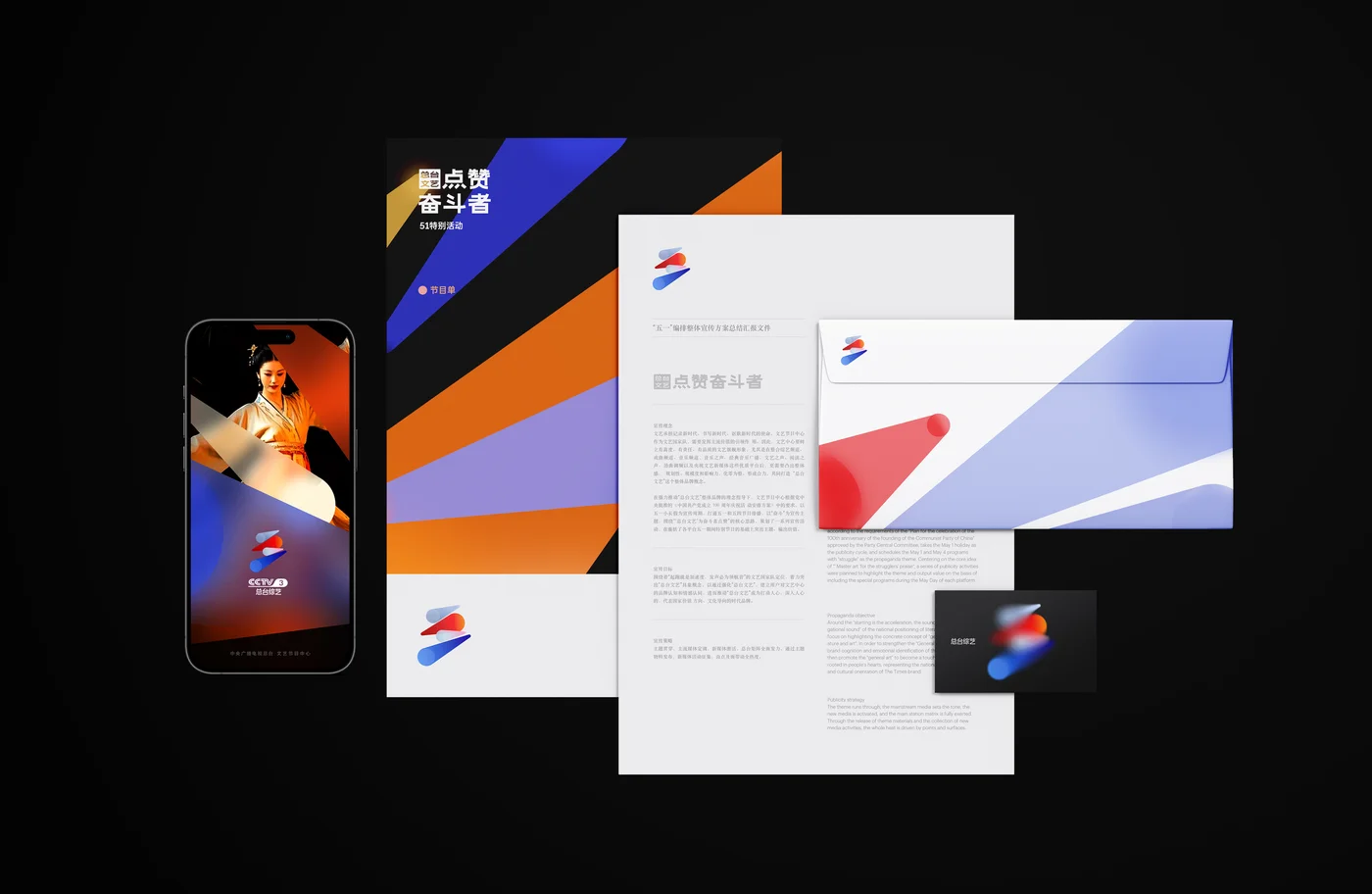 CCTV 总台综艺新媒体形象升级 · 设计咨询(STOYARD 项目) ## 为什么越来越多设计开始变得相似? 今天的设计行业比过去任何时候都更依赖数据。 企业希望通过用户研究降低风险,通过市场测试验证方向,通过指标衡量效果。这些方法本身并没有问题,它们帮助设计建立了更科学的决策机制;但当所有决策都试图寻找最安全答案时,设计也开始变得趋同,类似的界面、类似的品牌表达、类似的视觉风格越来越常见。因为**数据擅长优化已有方案,却很难创造从未出现过的新事物**;市场研究能够告诉我们用户喜欢什么,却无法告诉我们未来可能喜欢什么。 广告大师 Bill Bernbach 曾说过:“规则是艺术家打破的,令人难忘的作品从未诞生于公式。”很多时候,真正推动设计进步的并不是数据,而是那些最初看起来不够合理、甚至带有风险的大胆尝试。 ## AI 正在加速设计标准化,审美与个性从哪里来? AI 已经能够生成视觉方案、撰写文案、制作原型甚至编写代码,许多过去需要数小时完成的工作,现在只需几分钟即可完成,这无疑是一场巨大的效率革命。但 AI 的能力本质上建立在已有数据之上:它通过学习海量已有作品生成新内容,最擅长总结规律、提炼模式和复现风格。换句话说,AI 能够高效生成“合理”的设计,却很难主动创造尚未存在的表达方式。 如果未来的设计工作完全依赖算法与数据,行业很可能进入一个高度标准化的阶段:作品会越来越成熟、越来越高效,但也可能越来越缺乏个性与惊喜。 这也是为什么,随着 AI 能力不断提升,**艺术思维反而变得更加重要。** ## 艺术思维真正提供了什么? 艺术思维并不意味着放弃理性,也不意味着拒绝商业目标。它更像是一种看待世界的方式。 艺术家往往会主动挑战既有认知,质疑习以为常的规则,并尝试寻找新的表达路径。他们关注的不只是事情如何运作,更关注事情为什么存在,以及是否存在另一种可能。设计从来不是简单地执行需求,而是在复杂约束中寻找新的解决方案;当所有人都遵循同样的方法和逻辑时,真正的创新往往来自那些愿意突破惯性的思考方式。 **艺术思维带来的价值,是让设计保持探索未知的能力。** ## 未来设计师最重要的能力,大概率不是设计能力本身 回顾设计行业的发展历程,设计师的价值始终在变化:早期设计师依靠视觉表达能力建立优势;互联网时代,设计师开始掌握交互与用户体验;而今天,越来越多执行层面的工作正在被工具和 AI 辅助完成。真正重要的能力,正在转向判断、洞察和创造新的意义。设计师需要理解商业、文化、技术与人性之间的关系,发现别人没有发现的问题,并提出新的可能性。 这些能力很难被流程化,也难以被自动化取代,而它们恰恰与艺术家长期具备的能力高度一致。  STOYARD Insight** “艺术立场”是 STOYARD 核心价值观之一。在多年沉淀中,我们不断将艺术立场结合具体的客户体验场景,与设计系统、增长模型、数据驱动设计以及 AI 辅助创作深度协作。这些工具和方法正在帮助设计行业变得更加高效,也让设计拥有了前所未有的生产能力。 **效率从来不是设计的最终目的。** 当越来越多设计工作能够被标准化和自动化时,设计师将不再局限于执行本身。AI 能够帮助我们找到最合理的答案,生成符合规律的设计,却很难提出从未被提出过的问题,也暂时无法真正理解文化、情感与人类的体验。 **关键词**: 设计思维、艺术思维、AI 设计、创造力、设计师成长、生成式 AI、数字体验、设计战略、未来工作方式、创意产业 **分类**: AI 趋势 / 设计思考 / 创造力 / 工作方式 **资料来源**: STOYARD 官方网站项目案例(欢集 FUNJI 品牌识别与 APP 设计、CCTV 总台综艺新媒体形象升级设计咨询)及团队公开观点;文章发布于 2026 年 6 月 16 日。 ## English Content > As design increasingly relies on data, efficiency and algorithms, artistic thinking may be the most important competitiveness of designers. It's not just about beauty, it's about creating new possibilities. ## Over the past two decades, the design industry has undergone a continuous process of specialization.User research, design systems, data analysis, A/B testing, growth models… More and more methodologies are introduced into the field of design, and design is gradually evolving from a creative activity that relies on intuition and experience to a professional discipline that emphasizes logic, efficiency and verifiable results. This change has brought many positive effects: design decisions are more rational, the design process is more standardized, and enterprises can evaluate the actual value of design through data. However, as the industry increasingly emphasizes solving problems, another problem has begun to emerge:**If the design is only efficiency and optimization, will it gradually lose the ability to create new possibilities?** In today's rapid development of generative AI, this problem is particularly important.  Huan Ji FUNJI Brand Identity, Web Page, APP Design (STOYARD Project) ## Design has never been just about solving problems, it's one of the most influential art forms. Regarding the relationship between design and art, there has always been a popular view in the industry: design is responsible for solving problems, and art is responsible for expressing itself; design is rational, art is emotional; design pursues function, and art pursues expression. But a look back at the history of design reveals that there was never a really clear border between the two. Since the Bauhaus movement, modern design has been based on the integration of art, technology and function. Whether it is Paul Rand, Saul Bass, Milton Glaser, or Massimo Vignelli, the reason why their works can continue to influence the latecomers across the times is not only because they effectively complete a certain function, but also because they have cultural significance, emotional power and distinct creative expression at the same time. In fact, what people remember is often not what the design solves, but how it feels.**Those really great designs can not only complete the task, but also touch people's hearts.**  CCTV General Station Variety New Media Image Upgrade, Design Consultation (STOYARD Project) ## Why are more and more designs becoming similar? The design industry today is more dependent on data than ever before. Companies want to reduce risk through user research, verify direction through market testing, and measure effectiveness through metrics. There is no problem with these methods themselves, they help design to establish a more scientific decision-making mechanism; but when all decisions are trying to find the safest answer, design also begins to become convergent, similar interface, similar brand expression, similar visual style more and more common. Because**Data is good at optimizing existing solutions, but it's hard to create new things that never happened.**Market research can tell us what users like, but it can't tell us what they might like in the future. Advertising guru Bill Bernbach once said: "Rules are broken by artists, and memorable works are never born of formula." In many cases, it is not the data that really drives design progress, but the bold attempts that initially seem unreasonable or even risky. ## AI is accelerating the standardization of design. Where does aesthetics and individuality come from? AI have been able to generate visual solutions, write copywriting, prototype and even code, and many tasks that used to take hours to complete can now be completed in just a few minutes, which is undoubtedly a huge efficiency revolution. However, AI's ability is essentially based on existing data: it generates new content by learning a large number of existing works, and is best at summarizing rules, refining patterns and recurring styles. In other words, AI can efficiently generate "reasonable" designs, but it is difficult to actively create expressions that do not yet exist. If future design work relies entirely on algorithms and data, the industry is likely to enter a highly standardized stage: works will become more mature and efficient, but they may also lack personality and surprise. That's why, as AI capabilities continue to improve,**Artistic thinking has become more important.** ## What does artistic thinking really offer? Artistic thinking does not mean abandoning rationality, nor does it mean rejecting commercial goals. It's more like a way of looking at the world. Artists often actively challenge the existing cognition, question the usual rules, and try to find new ways of expression. They focus not only on how things work, but also on why things exist and whether there is another possibility. Design is never about simply executing requirements, but looking for new solutions in complex constraints; when everyone follows the same method and logic, real innovation often comes from those who are willing to break through the inertia of thinking. **The value of artistic thinking is to keep the design's ability to explore the unknown.** ## The most important ability of future designers is not the design ability itself. Looking back on the development of the design industry, the value of designers is always changing: early designers rely on visual expression to establish advantages; In the Internet era, designers began to master interaction and user experience. Today, more and more executive-level work is being assisted by tools and AI. The truly essential skills are shifting toward judgment, insight, and the creation of new meaning. Designers need to understand the relationship between business, culture, technology and human nature, discover problems that others don't, and suggest new possibilities. These abilities are difficult to be streamlined and replaced by automation, and they are highly consistent with the abilities that artists have long possessed.  STOYARD Insight** "Artistic position" is one of STOYARD core values. Over the years, we have continued to combine artistic positions with specific customer experience scenarios, collaborating deeply with design systems, growth models, data-driven design, and AI-assisted creation. These tools and methods are helping the design industry become more efficient and give design unprecedented productivity. **Efficiency is never the ultimate goal of design.** When more and more design work can be standardized and automated, designers will no longer be limited to the implementation itself. AI can help us find the most reasonable answers and generate regular designs, but it is difficult to ask questions that have never been asked before, and it is temporarily impossible to truly understand culture, emotion and human experience. **Keywords**: Design Thinking, Artistic Thinking, AI Design, Creativity, Designer Growth, Generative AI, Digital Experience, Design Strategy, Future of Work, Creative Industries **Category**: AI trends/design thinking/creativity/ways of working **Source of Information**: STOYARD official website project cases (FUNJI brand identification and APP design, CCTV head office variety new media image upgrade design consultation) and team public opinions; The article was published on June 16, 2026.