
How do hard technology enterprises do brand upgrade? Visualization Expression of Technology Value from Light Wheel Intelligence
Let the professional value of hard technology be accurately understood by the market.
A technology-based company may have solved a difficult engineering problem, but still needs to repeatedly explain to the outside world: what exactly do we do, how is it different from other companies, and why is it worth working with? For physical AI, physical intelligence, and advanced manufacturing companies, the important task of brand upgrading is to shorten the distance between technical strength and market understanding.
Good hard technology brand design needs to transform the real business logic of the enterprise into clear identification, credible expression and communication assets that can be used continuously.
The brand upgrade of light wheel intelligence provides a specific case for this problem. According to the STOYARD project, Light Wheel intelligently focuses on physical AI data and evaluation infrastructure, connecting human behavior data, synthetic data, model evaluation and real deployment with simulation technology. Starting from the core positioning of "building physical AI infrastructure", the STOYARD establishes a new brand vision system for it. This article focuses on this design practice and discusses how technology-based companies can make their value easier to understand.

Project original: light wheel intelligent brand logo and core vision.
1. Project background: Infrastructure enterprises need to clarify their position in the industry.
Products for end users can often create an intuitive impression through appearance and usage scenarios. Infrastructure enterprises are more difficult to "understand at a glance": its value may lie in data, tools, models or evaluation processes, affecting the entire process of customer development and deployment.
The brand expression of light wheel intelligence therefore needs to answer a key question: how can people understand that it carries a set of system capabilities? If only robot photos or common scientific and technological special effects are used, users can easily remember the industry, but not necessarily the unique position of the enterprise.
The clearer the brand positioning, the easier it is for subsequent logos, graphics, color and communication content to revolve around the same core.For the team that is upgrading the brand of the AI enterprise, this is also the most worthwhile work before the design starts: first clarify your role, and then establish the corresponding visual language.
2. Challenges: Both to retain professionalism and to establish an understanding portal

Technology communication usually faces a variety of readers. R & D teams focus on competency boundaries and verification methods, purchasing and business leaders focus on the value of cooperation, and investors and candidates want to judge the direction of the company. A set of brand expressions needs to allow them to find a common cognitive starting point while leaving room for deeper understanding.
The difficulty is that too many terms will increase the threshold of understanding, and the expression is too general and does not reflect technical differences. Brand design needs to make judgments and extract the structural relationships that best represent the company, rather than trying to put all the technical details into a graphic.
The logo is responsible for establishing identification, the structure diagram is responsible for assisting understanding, and the business content and real evidence are responsible for supporting judgment.Only by clarifying their respective tasks can vision and content serve customer communication together.
3. How to respond: Extract brand identity from the business structure.
The sign of light wheel intelligence takes three-dimensional space and hierarchical structure as the starting point of design. The construction diagram in the project will AI the relationship between the physical base, the world, behavior and evaluation. The design instructions further summarize it as a progressive ability from basic bearing, world and behavior modeling to evaluation feedback.
The significance of this design method is to establish a connection between the structure of the graphic and the positioning of the enterprise. The hierarchical relationship responds to the systematicness of the platform, the spatial transition echoes the mapping between the physical world and the digital model, and the negative space forms the recognition memory point.
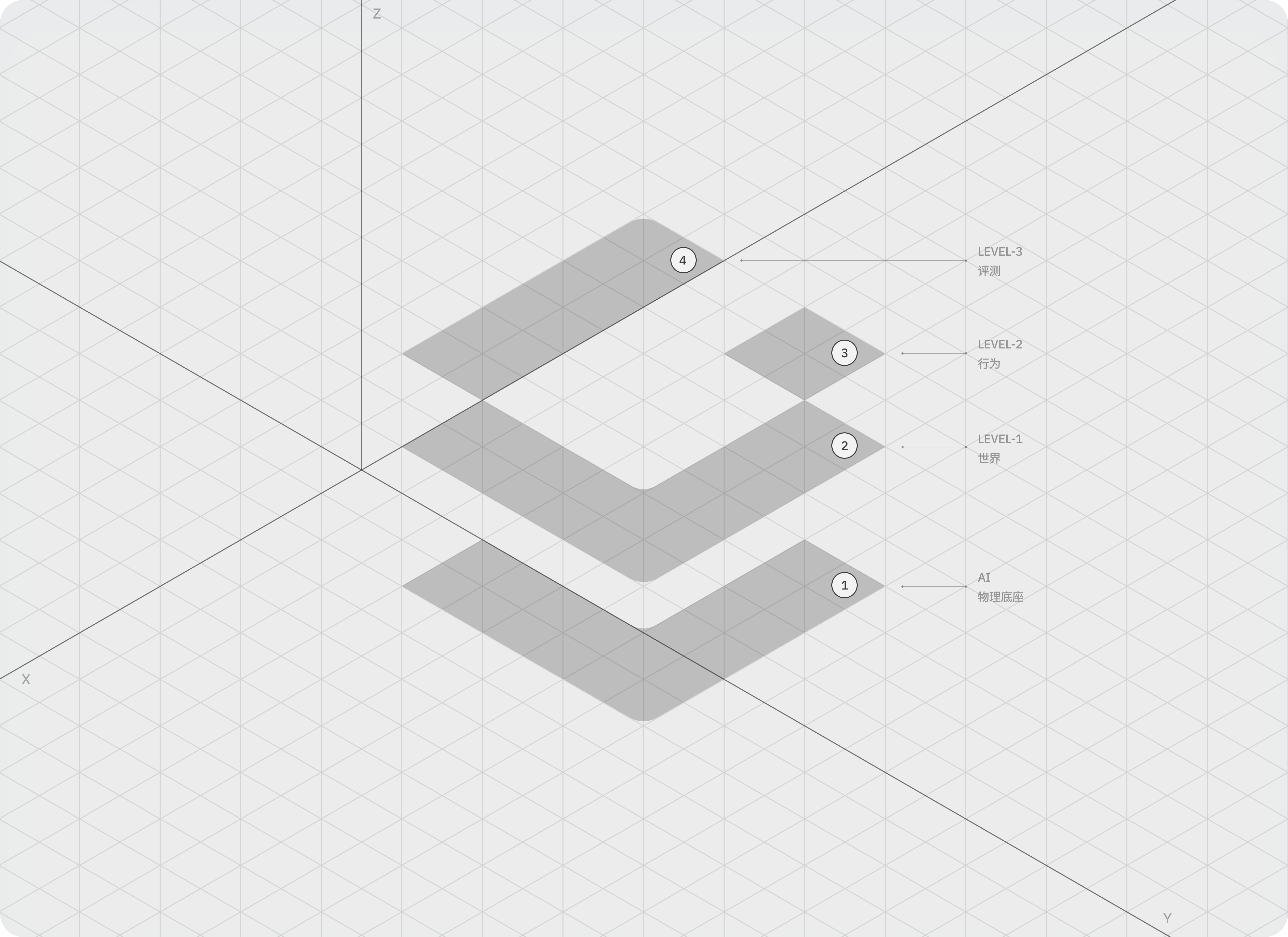
The original project: the spatial structure of the logo corresponds to the business concept. This figure is a description of brand building, not a product technical architecture diagram.
The user does not have to read the full meaning of the sign the first time they see it. The logo first needs to be recognizable; when it appears together with the company's introduction, product content and communication materials, the meaning behind the structure will gradually accumulate.
The value of design judgment lies in choosing the core feature that is worth remembering for a long time and establishing a stable expression for it.This also allows the brand to adapt to new businesses in the future without being limited by the shape of a specific product.
4. From logo to specification: let professional sense stand up to the use of different scenes
Brand image will eventually enter the scene of different sizes, backgrounds and information density. The logo is set up on the presentation and only partially completes the work; it also needs to be clear in promotional materials, digital interfaces and daily content.
In the light wheel intelligent project, the unified mapping relationship, text form and color application together constitute the visual rules. Blue and purple bear the core identification, black and white and gray scale provide contrast and information level. The combination of logos in different contexts keeps the brand consistent in the changes.
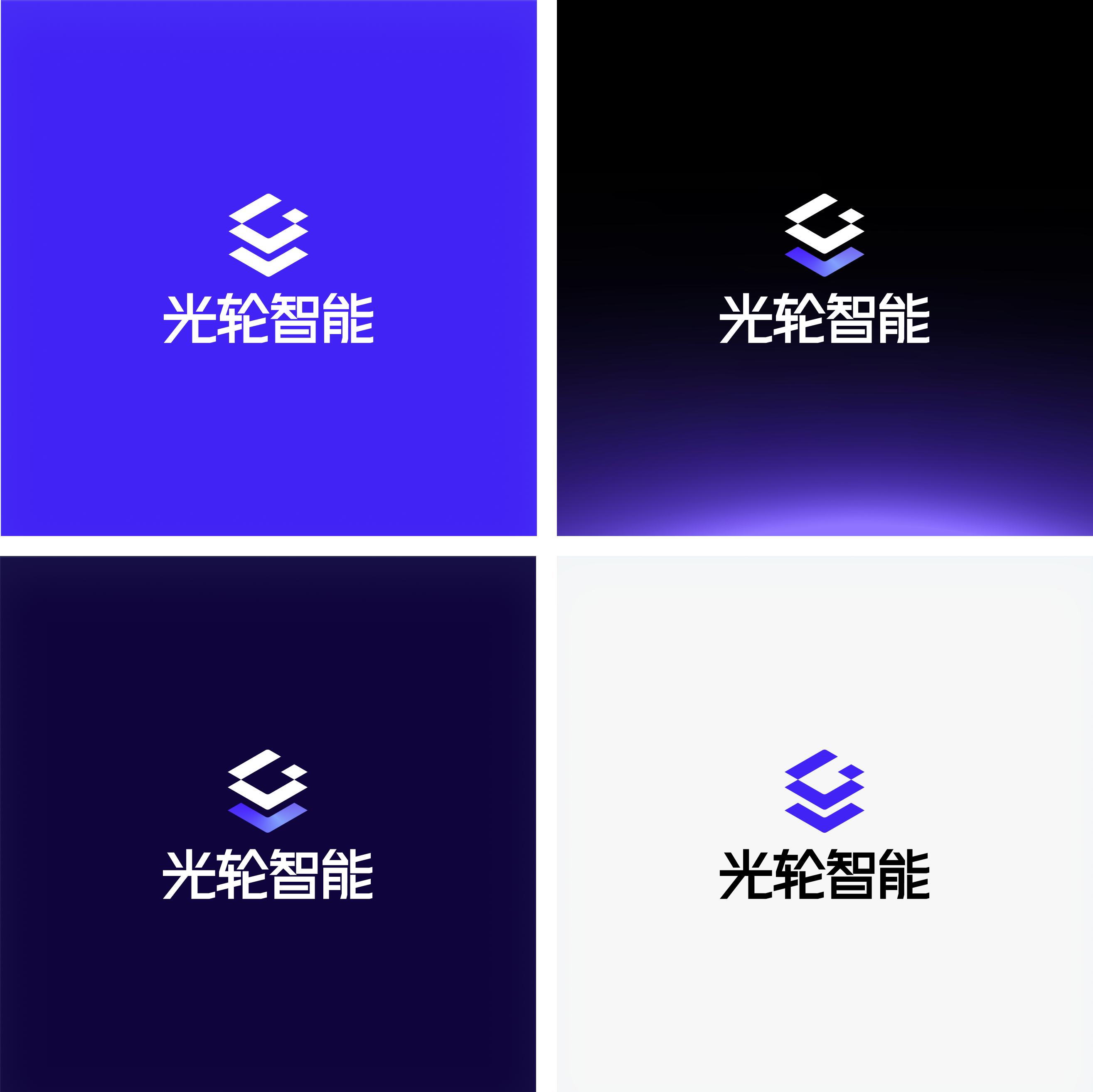
Project Original: Brand color and logo combination in different backgrounds.
For B2B companies, such specifications have practical collaborative value: there is a clear basis for marketing teams to produce new content; external suppliers can compare uniform rules when implementing them; and it is easier to be consistent when different business units are presented externally.
A mature and complete delivery should allow the customer to know how to properly use, expand and maintain this set of brand assets after the end of the project.The specifications that can be used are important conditions for the transformation of the design from one-time results to long-term capabilities.
5. Results display: let the brand system enter the real communication context
The activity communication materials in the project show the extension mode of the visual system: signs, auxiliary graphics, colors and text levels are organized in the same picture, which not only maintains enterprise identification, but also carries specific information such as activity theme, guests and time.
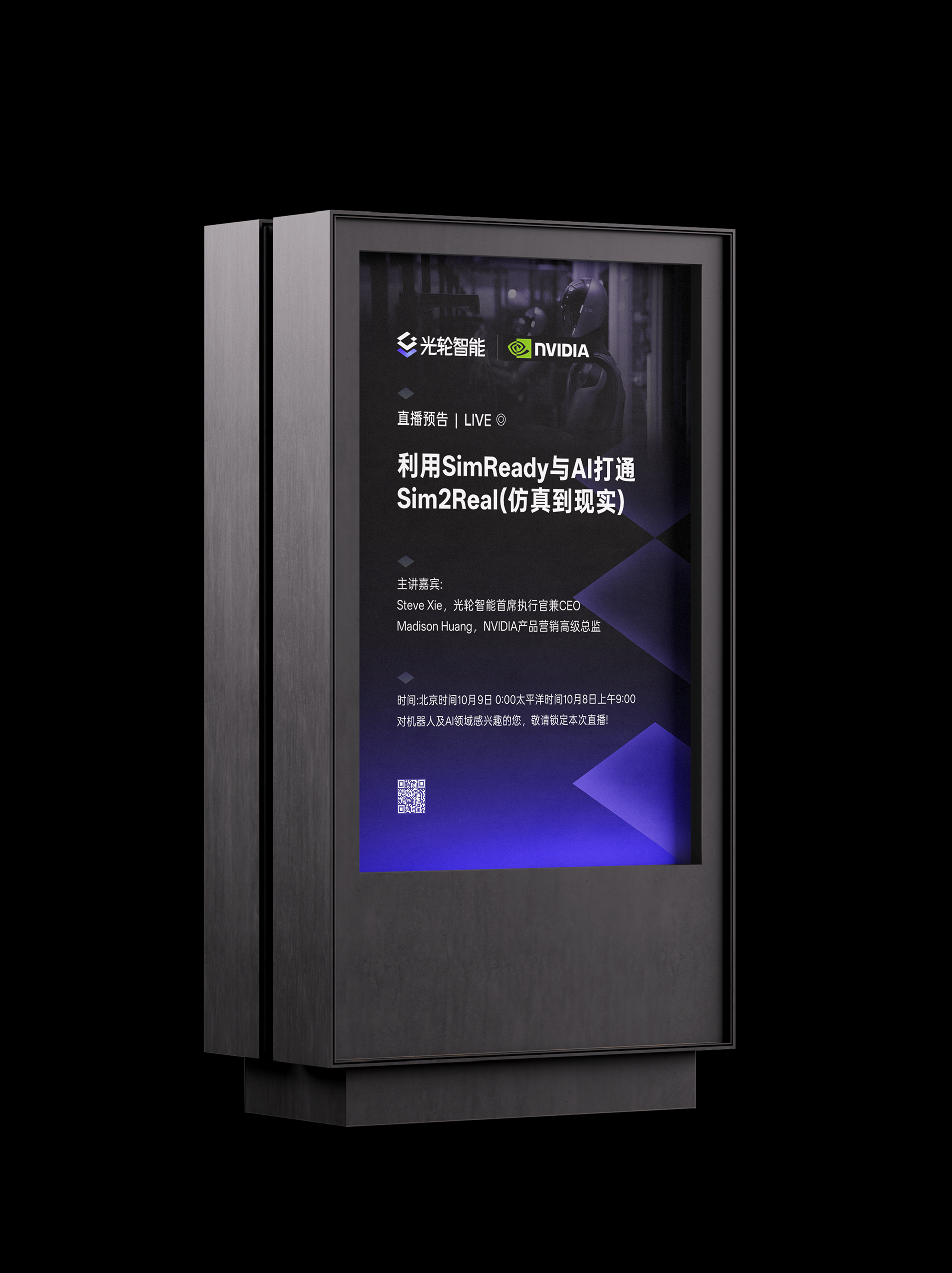
Project original: activity poster application effect diagram, used to show the spread of brand system extension.
When evaluating the design of a technology brand, you can ask more specific questions: is the hierarchy still clear after new content is added? Is the brand still recognizable when juxtaposed with the partner logo? Can the same expression be continued when different teams produce materials? These questions are closer to the daily needs of the enterprise than evaluating a single renderings.
From the results that can be displayed, the light wheel intelligent project has established a link between signs, spatial structure, color and communication applications. It provides a unified foundation for subsequent customer communication and brand communication. As for customer acquisition, financing or sales growth, it is also necessary to combine channel, product and operational data assessment, not just design display to make attribution.
6. For hard technology companies, where is the brand upgrade worth investing?
From the practice of light wheel intelligence, we believe that the commercial value of hard technology enterprise brand design can be understood from three aspects:
1. Reduce the cost of understanding.Let potential customers identify the business role of the enterprise more quickly, so that subsequent communication can enter the capabilities, needs and cooperation conditions, rather than repeatedly stay in the basic introduction.
2. Establish a consistent perception.When customers contact enterprises in different channels, they can see the corresponding image and content, and create conditions for the accumulation of professional trust.
3. Support continuous collaboration.Through clear design rules and extensible visual language, reduce repeated judgments in subsequent production, so that brand assets can be used continuously with business development.
For teams looking for hard technology brand design, AI enterprise VI upgrade or technology value visualization services, when selecting partners, it is worth paying attention to whether they can understand the business, put forward design judgments, and implement judgments into a complete visual system. If the project further involves the official website or digital products, it is also necessary to evaluate the information architecture, interaction design and technical service capabilities to connect brand expression with actual experience.
What STOYARD want to help customers solve is that the value of technology is weakened, misunderstood or difficult to remember in the external expression.When an enterprise has a clear, unified and sustainable brand language, every introduction, display and dissemination will have a better chance to become the accumulation of long-term brand equity. This foundational capability has long-term value for technology-based businesses that need to continually expand their customers and partners.
To view the full project:Light Wheel Intelligence: Building a Seen Infrastructure for Physical AI